

APIs Signal a Turning Point: Gift Cards Must Evolve as Brand Power Returns to IRR
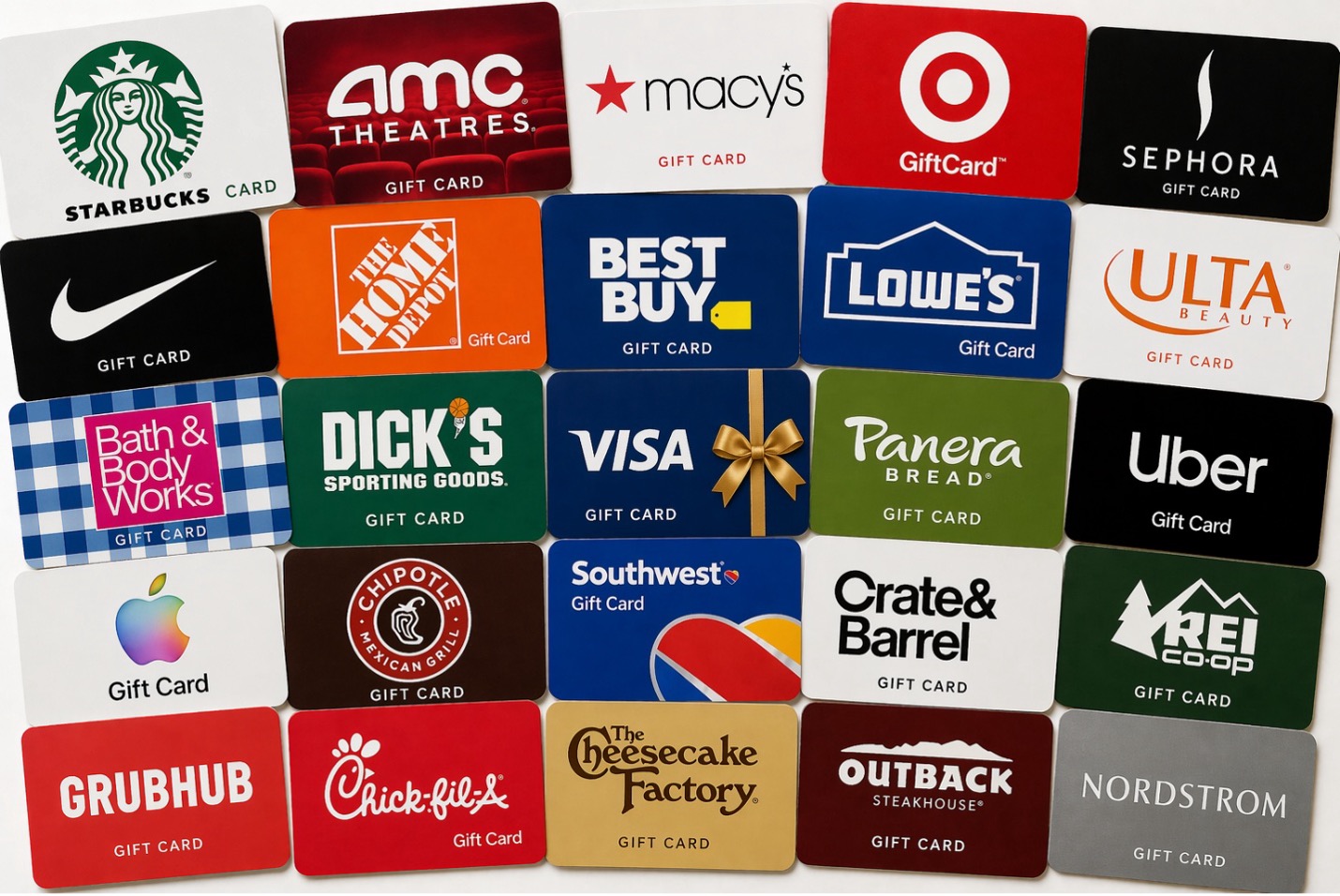 Gift cards are not disappearing from incentive, rewards, and recognition (IRR) programs—but their decades’ long surge in the market may be threatened by new technologies favoring greater use of brands. Here’s how the gift card market can head off the threats.
 The Quiet Commoditization of Gift Cards
The Hidden Economics: Why Value Gets Lost
APIs Didn’t Just Disrupt—They Reopened the Door
Why Gift Cards Are Being Underserved
The Return of Brand Media—Now Supercharged
A Constructive Path Forward
Click here to subscribe to the ESM weekly e-newsletter.
Put a cash equivalent gift card into a reward catalog and almost anyone will tell you that it will eat up to 70% over redemptions for more specialized retail gift cards and merchandise. This is fine if the purpose of the program is to compensate people; however, it is questionable if the goal is to reward people above and beyond their compensation for exceptional performance in a way they will never forget.
Given the difficulty of featuring the latest brands, products and pricing in online catalogs for decades, gift cards captured a dominant role in catalogs because of the ability to offer people the greatest amount of choice at a transparent value. For the last two decades, gift cards have been the easiest answer in IRR: simple to distribute, easy to understand, and universally accepted. But ease has come at a cost. In today’s catalog-driven environment, gift cards risk becoming the least thoughtful part of a program—optimized for transactional efficiency rather than emotional impact.
Because of the perceived value of gift cards to program participants, many companies insist on using gift cards, even though they are in effect paying retail for the products and even markups on some gift cards because several are effectively cash equivalents with no margins for resellers.
Meanwhile, the same technologies that helped commoditize gift cards are now enabling something far more powerful: the return of brand storytelling, curated experiences, and measurable engagement to reward catalogs at wholesale prices. It is now possible for catalogs to have direct feeds from the world’s leading brands and latest products at the latest wholesale pricing so that program participants can increasingly one-stop shop for the latest and greatest products and the best possible points value—often well below retail. Catalogs with real-time feeds to the latest name brand merchandise report significant increases in product sales.
Add to that low margins for gift cards, fraud exposure, and commoditization have reduced them to a default currency for catalogs rather than a strategic motivator or preferred solution. With new API-driven merchandising capabilities are restoring the power of brands, experiences, and storytelling, catalogs can now feature the latest name brand products at wholesale prices and with retail specials.
The future belongs not to abandoning gift cards, but to rethinking their role within a broader, more intentional reward strategy also focused on story telling. Gift cards are not over or in threat of extinction in the IRR business. It’s that their reign as the centerpiece of IRR—unquestioned and unexamined—is over. What comes next is more demanding—but far more valuable: a system in which brands, experiences, and thoughtful design reclaim their role at the center of human motivation.
The Quiet Commoditization of Gift Cards
The IRR ecosystem has, in many ways, trained itself into a corner. Large aggregators, built for scale and efficiency, appear to have inadvertently flattened the gift card category into a commodity. They generally do not differentiate between brands, do not prioritize which retail brands deliver the most emotional impact and personal connection with which audiences, and appear to have little economic incentive to do so. The consequences are clear:
- Extremely low margins limit innovation and strategic investment by incentive companies to better utilize gift cards.
- Fraud and breakage concerns help undermine trust and long-term value.
- Default dominance of a few brands (e.g., Amazon or prepaid cards) capture the majority of redemptions with little to no margins for the companies that manage the catalogs.
- There appears to be little attention paid to behavioral science in catalog design and merchandising, even though motivation and perception depend on perceived value—not just face value.
The Hidden Economics: Why Value Gets Lost
An often-overlooked issue is how gift cards are priced and delivered within programs. When organizations offer gift cards, employees are typically redeeming at full retail value—the same price they would pay on their own. On the one hand, that’s good, because employees feel confident in the value. However, because margins in the gift card ecosystem are so thin, resellers and solution providers have limited room to add value other than mark up the card or otherwise charge a management and service fee. In many cases, they must markup cards simply to sustain the business model, further eroding perceived value.
Contrast this with merchandise and curated rewards:
- Merchandise is sourced at wholesale or below-retail pricing and even Amazon except in consumer electronics and a few other niche categories.
- Solution providers can apply a margin while still delivering below-retail value to the end user.
- Participants receive a reward that they and significant others will associate with the organization for as long as they use it.
APIs Didn’t Just Disrupt—They Reopened the Door
The same API (Application Programming Interface) infrastructure that enabled instant gift card delivery is now enabling something far more transformative: dynamic, curated reward ecosystems built around brands and experiences.
As highlighted in RRN’s coverage of APIs and merchandising, the technology now exists to:
- Integrate real-time brand catalogs and experiences
- Personalize rewards based on behavior and preferences
- Deliver curated, story-driven reward options instead of static catalogs
- Connect rewards directly to engagement data and outcomes
- Ensure the latest brands and products are available real-time at the latest pricing.
Why Gift Cards Are Being Underserved
Ironically, gift cards themselves are not the problem—they are being underserved by the system around them. Today’s gift card model:
- Treats all gift cards as interchangeable.
- Ignores hedonic motivation—the joy, anticipation, and meaning tied to specific brands.
- Fails to leverage the storytelling power of retail brands.
- Reduces rewards to cash equivalents, stripping them of differentiation.
The Return of Brand Media—Now Supercharged
The emerging opportunity is not to replace gift cards—but to reposition them within a broader “brand media” strategy. APIs now allow programs to:
- Curate gift card assortments tied to retail brand stories, lifestyle, identity, or achievement.
- Bundle gift cards with experiences, merchandise, or storytelling content.
- Emphasize wallet power—what the reward enables, not just what it is: reconsider the value of physical, reloadable gift cards.
- Create lasting memory value, not just immediate spend.
A Constructive Path Forward
Rather than viewing gift cards as a declining category, the IRR industry has an opportunity to elevate them.
Five practical shifts can ensure their impact:
1. Reintroduce brand storytelling. Highlight what the retail brand stands for—heritage, lifestyle, aspiration—not just the denomination.
2. Differentiate from cash. Avoid positioning gift cards as interchangeable with prepaid cards or cash equivalents.
3. Curate, don’t aggregate. Use APIs to present thoughtful selections tied to audience segments and program goals.
4. Leverage pricing advantages where possible. Blend gift cards with merchandise or experiences that deliver below-retail perceived value, enhancing impact.
5. Design for lasting impact. Incorporate follow-up touchpoints, personalization, and reinforcement to extend the emotional life of the reward.
6. Include instore experiences or home set-up or assembly.
The IRR field is entering a new phase. Gift cards will remain important—but their role will change. Programs that rely on them as a default currency risk drifting further into commoditization. Those that integrate them into a broader, API-enabled brand strategy will unlock far greater impact.
Enterprise Engagement Alliance Services
 Celebrating our 17th year, the Enterprise Engagement Alliance helps organizations enhance performance through:
1. Information and marketing opportunities on stakeholder management and total rewards:
- ESM Weekly on stakeholder management since 2009. Click here to subscribe; click here for media kit.
- RRN Weekly on total rewards since 1996. Click here to subscribe; click here for media kit.
- EEA YouTube channel on enterprise engagement, human capital, and total rewards since 2020
 Management Academy to enhance future equity value for your organization.
3. Books on implementation: Enterprise Engagement for CEOs and Enterprise Engagement: The Roadmap.
4. Advisory services and research: Strategic guidance, learning and certification on stakeholder management, measurement, metrics, and corporate sustainability reporting.
5. Permission-based targeted business development to identify and build relationships with the people most likely to buy.
Contact: Bruce Bolger at TheICEE.org; 914-591-7600, ext. 230.