.jpg)

Gift Cards Are Powerful Referrals
A Recommendation That Can Be Measured
Program Redemptions Reveal Preference
What Brands Could Learn
Turning the Information Into Action
Click here to subscribe to the ESM weekly e-newsletter.
Companies invest heavily in referral programs, affiliate links, promotional codes, customer surveys, and social-media monitoring to determine who recommends their products. Yet much of the most valuable word-of-mouth activity remains invisible because recommendations often occur informally between friends, relatives, colleagues, and neighbors.
Consumer and business-to-business gift cards provide a potentially more reliable signal. When someone spends money to give another person a brand-specific gift card, that individual is doing more than mentioning the company. The purchaser is effectively saying: I know you like this brand, or this brand is good enough—and I trust it enough—to recommend that you spend money there.
A meta-analysis of multiple studies using AI suggests that the typical retail company generates about 1% to at most 5% in gift cards per year. Those with well-promoted mature gift card companies can range from 5% to up to 10% of sales.
A Recommendation That Can Be Measured
Tracking consumer gift card purchases is valuable both in the consumer and business market. A formal referral link for consumers measures who wants
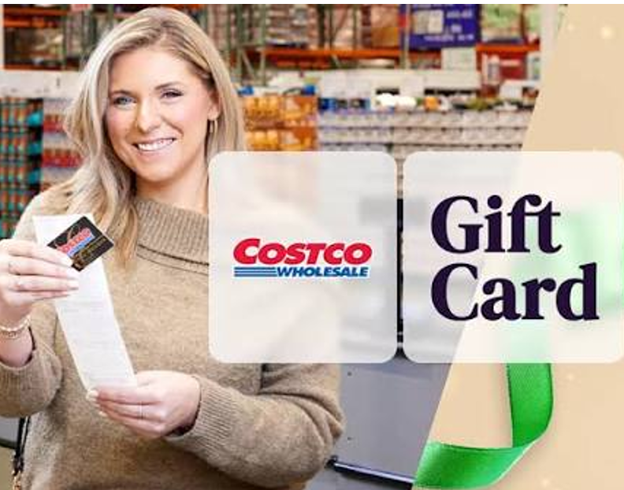 credit for making a recommendation. A consumer gift-card purchase measures who is willing to put money behind one. Tracking consumer gift card data is the best way to measure actual referrals from quarter to quarter and year to year to gauge over time just how popular your brand really is. If purchased by an ongoing customer, and captured in the customer relationship management data, your organization can generate extensive data on who is buying gift cards, their demographics, location, and to whom are they sending them. This amounts to a powerful referral in that your company did not have to pay for it, and quite often the individual purchases something above the face value of the card. Sometimes, it’s even a new customer.
 Business to business gift card sales are an equally important engagement indicator. The Incentive Gift Card Coalition, a strategic industry group within the Incentive Marketing Association, promotes gift cards for use in corporate incentives, recognition, customer loyalty, and other business-to-business programs. Its membership includes brands, distributors, processors, agencies, resellers, and program buyers throughout the gift-card ecosystem.
These systems already generate significant transaction data. Depending on the platform, contractual arrangements, and privacy rules involved, brands may be able to identify in aggregate form:
- How many gift cards were purchased or selected.
- The value and denomination of each card.
- Whether the card came through a retail location, website, corporate program, loyalty platform, recognition catalog, or incentive provider.
- The geographic area in which it was purchased.
- The location or region to which it was delivered.
- Where and when it was redeemed.
- Whether the recipient spent more than the card’s value.
Program Redemptions Reveal Preference
Gift cards selected through incentive, recognition, and loyalty programs provide another valuable signal. A participant presented with dozens or hundreds of choices who selects a particular restaurant, retailer, entertainment company, hotel, or service provider is demonstrating a clear preference.
It may not always be a referral in the strictest sense, particularly when recipients use the cards themselves. It is, however, a measurable endorsement or affinity signal based on an actual choice rather than an answer to a survey question.
RRN has long published redemption information provided by companies such as CarltonOne showing which brands and products participants select most frequently. It has also reported how CharityChoice redemption data can provide an indicator of the charitable organizations people favor. The same principle can be applied to commercial brands: actual selections provide evidence of popularity that companies can analyze by program, geography, audience, denomination, and time period.
What Brands Could Learn
Consider a restaurant chain with hundreds of locations. Its gift-card data could reveal which restaurants sell the most cards, which communities receive them, the average amount given, and where recipients ultimately redeem them. If people are part of loyalty program, they may be able to analyze aggregate data for trends and perhaps identify new ways to increase gift card sales.
A location that sells a large number of gift cards to people in surrounding communities may have influence well beyond its immediate trading area. A store whose cards are frequently selected through employee-recognition or customer-loyalty platforms may have untapped potential for corporate sales. A brand receiving cards from one region but redeeming them heavily in another may discover travel, family, commuting, or migration patterns that conventional store-level sales data cannot show.
Local gift-card platforms make this analysis especially relevant. RRN recently reported on Gift Card Market, a service that presents recipients with nearby restaurants, spas, boutiques, and service providers based on location. Such platforms can potentially show not only which local brands are selected but where demand is emerging and which categories are most attractive in different markets.
Turning the Information Into Action
Brands should begin by treating gift-card operations as a source of marketing intelligence rather than only as a payment or accounting function. Gift-card, loyalty, corporate-sales, e-commerce, franchise, and marketing teams can develop a common dashboard combining card issuance, program selection, delivery, and redemption information. The findings could help companies:
- Identify locations with unusually strong customer advocacy.
- Find markets where cards are being sent but the brand has limited distribution.
- Target digital advertising or local promotions around recipient communities.
- Recruit new franchisees or evaluate possible locations.
- Determine which incentive, recognition, and loyalty programs generate the most valuable exposure.
- Adjust the brands, denominations, or experiences offered through corporate channels.
- Measure whether recipients become loyalty members, make repeat purchases, or spend beyond the card value.
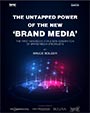
Even with those limitations, the directional value could be significant. RRN has described brands and gift cards as a form of media because the choice of a reward communicates a story and creates an experience. Gift-card data adds another dimension: it can show where that story is being shared, who is selecting it, and how far the brand’s influence may travel.
For companies seeking better evidence of customer advocacy, the answer may already be sitting inside their gift-card systems.
Enterprise Engagement Alliance Services
 Celebrating our 17th year, the Enterprise Engagement Alliance helps organizations enhance performance through:
1. Information and marketing opportunities on stakeholder management and total rewards:
- ESM Weekly on stakeholder management since 2009. Click here to subscribe; click here for media kit.
- RRN Weekly on total rewards since 1996. Click here to subscribe; click here for media kit.
- EEA YouTube channel on enterprise engagement, human capital, and total rewards since 2020
 Management Academy to enhance future equity value for your organization.
3. Books on implementation: Enterprise Engagement for CEOs and Enterprise Engagement: The Roadmap.
4. Advisory services and research: Strategic guidance, learning and certification on stakeholder management, measurement, metrics, and corporate sustainability reporting.
5. Permission-based targeted business development to identify and build relationships with the people most likely to buy.
Contact: Bruce Bolger at TheICEE.org; 914-591-7600, ext. 230.