

How to Detect Impact-Washing
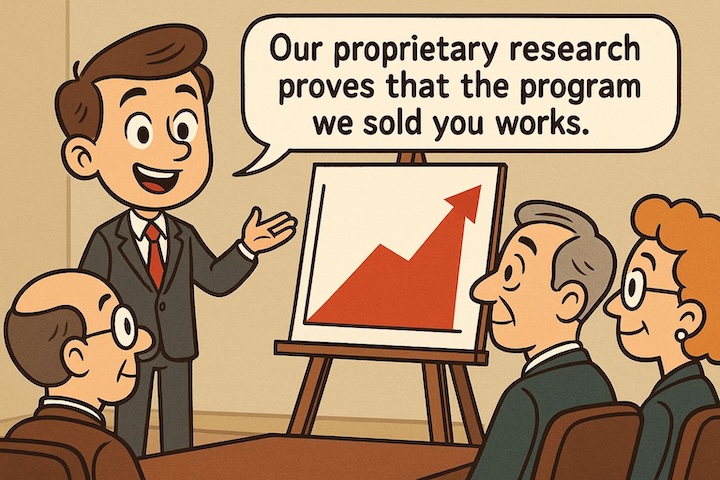 As predicted when the Enterprise Engagement Alliance began promoting the importance of impact in the world of engagement and incentives, rewards, and recognition, more companies have begun to use this term in their marketing. Here’s how to separate fact from fiction.
 Why Most IRR Firms Cannot Measurement Impact—They Don’t Have the Data
How to Detect Impact-Washing
Click here to subscribe to RRN weekly, and here for an RRN media kit.
Words matter. In the sustainability movement, impact refers to what organizations do to the environment or society. In the world of engagement and total rewards, it refers to what people contribute in tangible ways to achieve the purpose, goals, objectives, and values of their organization, department, or team.
As frequently reported in RRN, the state of measurement in people-related expenditures remains early stage, according to Jack and Patti Phillips, Chairman and CEO respectively of the Birmingham, AL-based ROI Institute, two of the world leaders in ROI measurement. The IRR (incentive, rewards, and recognition) field is not necessarily to blame for the poor state of measurement when it comes to most people-related expenditures. Not only have even large clients not demanded rigorous return-on-investment measures, they often don’t have the necessary data because it resides in multiple siloes and simply cannot provide their solution providers with the necessary information.
Why Most IRR Firms Cannot Measurement Impact—They Don’t Have the Data
With the help of experts in human capital analytics, statistical process controls, and total quality management, the Enterprise Engagement Alliance is putting together a growing number of case studies showing precisely how almost any type of engagement effort can be measured using the same processes used for decades in factories, laboratories, and hospitals around the world. These systems correlate results measures—the specific desired outcomes usually expressed in numeric terms—with behavior measures—the actions required to achieve the outcomes.
Even when solution providers have the knowledge about impact metrics, the challenge is that the solution or technology providers often do not have the data necessary to measure outcomes, let alone correlate them with desired behaviors. Clients often do not provide precise outcome data in terms of sales, profit margins, turnover, referrals, productivity, quality, safety, wellness, sometimes because it resides in various silos not considered worth the effort to overcome.
How to Detect Impact-Washing
Impact washing is like virtue signaling and greenwashing, making claims that customers and prospects presumably wish to hear without clear substantiation. Organizations are known to partake in such practices when they think the story has appeal, so much so that the entire ESG (environmental, social, and governance) movement became a bad word associated with “woke.”
The best way to detect impact washing is to master the basic principles of engagement yourselves. There is an entire discipline of human capital analytics to help organizations better understand the value created by stakeholders along with prescriptive and predictive analysis of people behaviors, but such broad expertise is not required in the narrower world of engagement, incentives, rewards and recognition. The basic statistical process controls used in total quality management more than suffice once companies combine their internal people engagement and financial data with engagement in their incentive and recognition technologies and other engagement levers.
Click here for a series of articles on impact measurement that not only include recommended metrics but how to put them to work in a practical way.
Questions to ask of a solution provider making claims about impact metrics.
1. How do they define impact?
2. What process do they use to measure the impact of their programs?
3. What data will they need from your organization and how will they ensure security?
4. Given that so few organizations demand serious impact measurement, what experience and/or training do they have in the processes involved.
5. How does their technology, if they have a platform, facilitate impact measurement?
6. What methods do they use to distinguish between correlation and causation when it comes to impact measurement?
7. What types of prescriptive or predictive analytics cab they provide and how?
8. What are the credentials of the people providing the analysis and how clearly can they describe their processes?
Enterprise Engagement Alliance Services
Celebrating our 15th year, the Enterprise Engagement Alliance helps organizations enhance performance through:
1. Information and marketing opportunities on stakeholder management and total rewards:
ESM Weekly on stakeholder management since 2009; click here for a media kit.
RRN Weekly on total rewards since 1996; click here for a EEA YouTube channel on enterprise engagement, human capital, and total rewards insights and how-to information since 2020.
2. Learning: Purpose Leadership and Stakeholder
 Management Academy to enhance future equity value and performance for your organization.
3. Books on implementation: Enterprise Engagement for CEOs and Enterprise Engagement: The Roadmap.
4. Advisory services and research: Strategic guidance, learning and certification on stakeholder management, measurement, metrics, and corporate sustainability reporting.
5. Permission-based targeted business development to identify and build relationships with the people most likely to buy.
6. Public speaking and meeting facilitation on stakeholder management. The world’s leading speakers on all aspects of stakeholder management across the enterprise.