

How to Make Business Gift Cards Feel Like Rewards, Not Compensation
.jpg) This RRN YouTube show and feature article are part of the EEA’s continuing series on effective practices in total rewards and enterprise engagement.
This RRN YouTube show and feature article are part of the EEA’s continuing series on effective practices in total rewards and enterprise engagement. Reframing Gift Cards as “Trophy Value,” not Cash Equivalents
Why Brands Enter the Business-to-Business (B2B) Gift Card Market
Open Loop, Closed Loop, and “Filtered” Cards That Shape Behavior
Choice Matters—But Too Much Choice Can Backfire
Personalization and Presentation: Digital and Physical Still Matter
Breakage: Reduce it by Making Rewards Meaningful
Merchandising and Curation: the Overlooked Lever
Gift Card Economics
Fraud is Real—Don’t Go it Alone
Click here to subscribe to RRN weekly, and here for an RRN media kit.
Gift cards are most powerful when designed as curated, personalized experiences that reinforce recognition—not as another form of compensation. The winning formula combines thoughtful selection, strong merchandising, relevant filtering, and expert execution to maximize impact, re-engagement, and program ROI. These are among the key findings of this recent EEA YouTube show.
Click here to view or listen to gain all their insights.
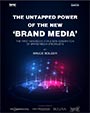
The program, hosted by Enterprise Engagment Alliance Impact Academy Founder Bruce Bolger, features: Cindy Willis, Senior Rewards Product Manager, Maritz; Marc Matthews, CEO, Pulse Experiential Travel; Tracey Klein, Senior Vice President, e-Gifter; and Anne Jetter, Chair of the Incentive Gift Card Council and in charge of Strategic Sales and Buyer Relations for SB Collective.
Across all panelists, one message stands out: Gift cards are everywhere in business rewards—employee recognition, consumer loyalty, research incentives, healthcare adherence programs, channel incentives, and more. But the panel made one point repeatedly: gift cards work best when they are treated as a memorable reward experience—not as cash or a paycheck substitute.
Reframing Gift Cards as “Trophy Value,” not Cash
Kicking off the conversation, Willis of Maritz urges companies to stop thinking of gift cards as “just a payment method.” In her view, gift cards are most effective when they are designed to motivate behavior by creating a moment someone will remember. She describes how Maritz highlights what’s unique about a brand—using lifestyle imagery in catalogs, emails, and promotions—to connect the reward to an emotional experience. A dinner out, for example, isn’t just a transaction; it could represent “the only time you and your husband can have a moment together,” or a way to celebrate a team success. Her bottom line: “We’re trying to think of it not just as a payment, but as a reward experience.”
Klein of eGifter reinforces that distinction with a practical example: if she receives cash, it’s likely to disappear into necessities—babysitters, groceries—making it feel transactional and quickly forgotten. But if she receives a reward she can choose—she cited Nordstrom or even a Lululemon jacket—that becomes aspirational and memorable. As she puts it, cash becomes transactional; meaningful rewards stick.
Why Brands Enter the Business-to-Business (B2B) Gift Card Market
From the brand and industry perspective, Jetter outlines why brands keep investing in gift cards—especially in B2B. She pointed to research and industry data discussed on the panel indicating gift cards are a major part of the market, and emphasized benefits brands care about:
- Trial: gift cards can prompt people to try a brand they haven’t used before
- Loyalty: they encourage repeat engagement with favorite brands
- Incremental spend (“upspend”): recipients often spend more than the card value, especially in restaurant and retail settings
- Additional sales and strength-building: gift cards leverage a brand’s existing appeal and can create new demand
Open Loop, Closed Loop, and “Filtered” Cards That Shape Behavior
Willis explaines the difference between card types:
- Open loop: prepaid cards running on Visa/Mastercard/Amex networks that can be used broadly
- Closed loop: merchant/retailer-specific cards usable only with that company
- Filtered prepaid (a hybrid): open-loop rails but restricted by category, merchant set, or location—designed to prevent the reward from becoming “pay your utility bill” money
This theme—guiding choice without overwhelming the recipient—keeps resurfacing throughout the show.
Choice Matters—But Too Much Choice Can Backfire
Matthews contends that choice is important, but so is a wide selection so that companies can select the experiences appropriate for each program. His company focuses on closed-loop cards that can only be used for pre-curated experiences or event tickets, ensuring the reward leads to something memorable rather than everyday expenses. He says his company’s online catalog has thousands of experiences and tickets to a wide range of ticket events—plus the ability “buy up” to a bigger experience. Companies can use a private label version of the company’s catalogs to filter experiences or event tickets for each program.
Customized and personalized experiences has become a major trend. Willis shares a concrete innovation that addresses this: a local gift card experience known as the Gift Card Market that serves up hyper-local restaurants, spas, home and auto services, and other venues near the recipient (or even where they might be traveling to). Her emphasis wasn’t just convenience—it was relevance: people receive gift cards to venues that have more meaning to them.
Jetter jumps in to say she loves this “shop local” concept—linking it to community support trends that accelerated during COVID—and calls it a strong example of how gift cards can evolve into something more meaningful than a generic option list.
Personalization and Presentation: Digital and Physical Still Matter
On format, Klein shares that eGifter started with a digital-first mindset, but quickly learned physical gift cards remain essential. Digital has advantages—security features, tracking, management, wallet integration (Apple Pay / Google Pay)—but physical cards are still needed for events, certain populations (including unhoused communities in government support programs), children, and healthcare programs where email data may not exist.
Willis confirms that reloadable, co-branded cards remain in demand—particularly in channel incentive programs—where a participant can transfer points to a branded card and see value added over time. The panel frames this as another way to increase “wallet power” and program stickiness.
Breakage: Reduce it by Making Rewards Meaningful
So what to do about a common concern: breakage—people not redeeming gift cards. Klein observes that breakage varies by program type. Employee programs tend to see lower breakage because participants are aware and engaged, while low-dollar, one-time market research rewards can see higher drop-off. Her strongest practical guidance:
- Make the reward meaningful in value (she noted $5 often isn’t enough to motivate redemption)
- Make the reward meaningful in relevance (don’t assume everyone wants the same coffee chain—offer a curated “coffee choice” set, or local options)
- Build program economics that anticipate the expected breakage profile
Willis adds that education is central to reducing breakage and improving outcomes. She says Maritz uses analytics and behavioral expertise to help clients move from “direct payment” approaches (checks/prepaid) into curated catalogs that create more excitement—travel, innovative gift cards, updated merchandise—supported by communications that promote the rewards.
Merchandising and Curation: the Overlooked Lever
Without reward curation, recipients often select the cash equivalent, which runs counter to the goal of distinguishing the reward from compensation, the panelists point out.
Amazon and Walmart tend to dominate redemption catalogs when included, which are essentially cash equivalents offering no discounts to the agencies that help design and implement online programs for this clients--a practice common in the agency business. Klein and Willis agree that catalog merchandising is critical—balancing promotion of desirable brands with company values (some do not want fire arms or alcohol included) or even legal considerations—some organizations will only use filtered cards to prevent use of restricted items. To Willis, merchandising is critical “if you don’t want your award winners using it to buy socks next time they are online. “Merchandising,” she insists, “is a must” if the goal is to create a lasting reward experience for the recipient.
Gift Card Economics
The panel also tackled the business mechanics behind reward programs. Clients need to understand that if they wish to use cash equivalent programs such as Amazon, Walmart, or credit card based gift cards, they can expect to pay a management fee for the curation and management of the catalog technology, customization, communications, customer support and other services.
At the same time, panelists suggested that curated, specialized rewards can demonstrate an understanding of the recipient while also creating healthier economics for solution providers and end-users—often with better discounts than pure cash equivalents—while delivering higher trophy value for recipients. For example, Pulse Experiential Travel can provide attractive margins for its gift cards offering guaranteed pricing for two years because his experiences often include multiple vendors. Many brand name retail gift cards also can offer discounts far beyond what is available for cash equivalent cards. Many retailers also can offer much more attractive discounts than the major retailers. Companies can more carefully curate rewards and get a bigger bang for the buck through more careful gift card brand curation.
Fraud is Real—Don’t Go it Alone
Klein emphasizes that fraud exists across digital cards, physical cards, and experiences—and urges organizations not to “go it alone,” but to work with experienced providers who build safeguards and guide proactive decisions. Matthews agrees, noting his platform includes multiple layers of safeguards and tight tracking. It is critical to address these issues with any gift card vendor.
Additional Information From Anne Jetter of the IGCCBottom of Form
Following the show Anne Jetter, IGCC Chair, sent additional reference information. The IGCC commissioned a study by Javelin study about the B2B gift card industry. It found that:
- The US B2B gift card industry is a projected to reach $61 billion dollars in 2026, compared with $44 billion in 2025. This includes both closed loop and open loop cards.
- The market is growing at a conservative compound growth rate of 7%.
- Gift cards remain a top redemption choice; individuals prefer gift cards over anything else by a large margin.
- Digital use is starting to approach a 50/50 split with physical.
Enterprise Engagement Alliance Services
Celebrating our 15th year, the Enterprise Engagement Alliance helps organizations enhance performance through:
1. Information and marketing opportunities on stakeholder management and total rewards:
ESM Weekly on stakeholder management since 2009; click here for a media kit.
RRN Weekly on total rewards since 1996; click here for a EEA YouTube channel on enterprise engagement, human capital, and total rewards insights and how-to information since 2020.
2. Learning: Purpose Leadership and Stakeholder
 Management Academy to enhance future equity value and performance for your organization.
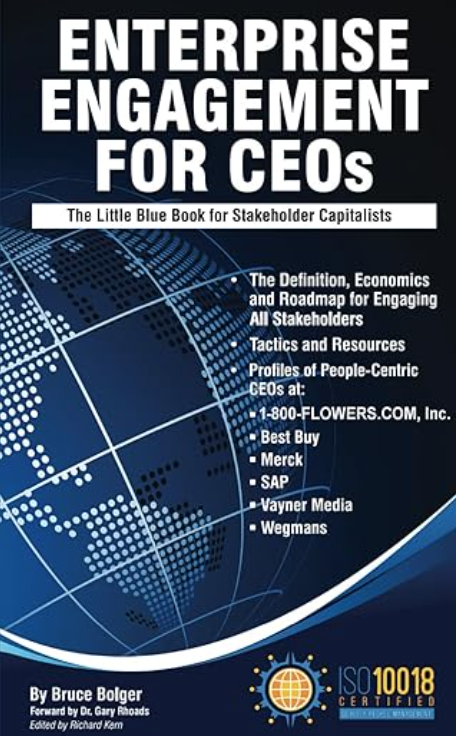
3. Books on implementation: Enterprise Engagement for CEOs and Enterprise Engagement: The Roadmap.
4. Advisory services and research: Strategic guidance, learning and certification on stakeholder management, measurement, metrics, and corporate sustainability reporting.
5. Permission-based targeted business development to identify and build relationships with the people most likely to buy.
6. Public speaking and meeting facilitation on stakeholder management. The world’s leading speakers on all aspects of stakeholder management across the enterprise.