.jpg)

Why "Doing It Yourself" Is Often the Biggest Risk in Marquis Event Rewards
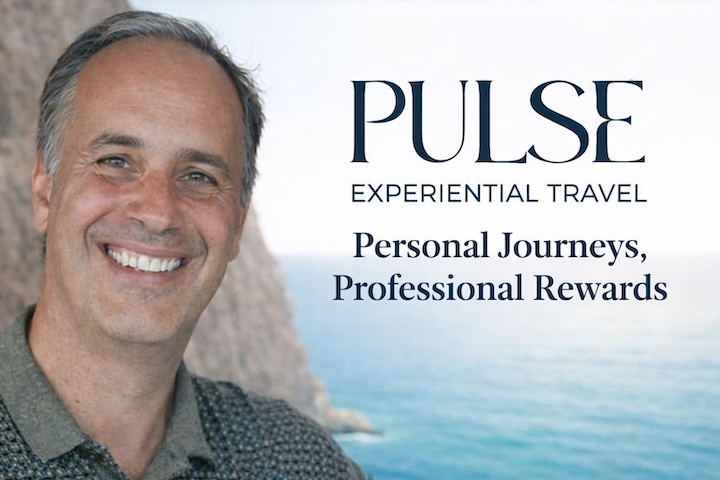 Inside the mind of Marc Matthews, CEO and Founder of Pulse Experiential Travel on what organizations and others need to know when offering their top performers or others the gift of tickets to marquis entertainment and sporting events. His company has provided corporate access to the world’s most famous entertainment, sporting, and related events since 1979.
What’s at Stake
The Secret is in the Logistics and Hospitality
What About the Unexpected?
Click here to subscribe to RRN weekly, and here for an RRN media kit.
When companies decide to reward top performers, host key clients, or stage a once-in-a-career experience, the intention is almost always right. The execution, however, is where many well-meaning organizations stumble. According to Marc Matthews, CEO and Founder of Pulse Experiential Travel, the most common mistake isn’t budget, ambition, or even creativity—it’s underestimating the complexity.
Matthews, who has more than four decades of hands-on experience at the world’s most coveted sporting and entertainment events, has seen firsthand how quickly a “simple” idea can unravel. His work spans Formula 1, the World Cup, the Masters, global concerts, and marquee cultural events—often for very small, very important groups, he adds.
Pulse Experiential Travel may be the first in the worldwide travel business to publish a corporate sustainability report consistent with the European Union Corporate Sustainability Reporting Directive audited by an outside impact management company.
What’s at Stake
The stakes are high because the audience is high value. “The first thing companies need to understand,” Matthews explains, “is who they’re entertaining.” A one-time contest winner, a sales rep who exceeded quota, or a top client generating millions in revenue will not necessarily receive the same experience. Each group carries different expectations, emotional weight, and business implications. Treating all identically with white glove service is critical. What's different are the seating, transfers, and other features included in the package.
Once the audience is defined, everything else follows: seating, access, hospitality, accommodations, transfers, and even how problems are handled when something inevitably goes wrong.
Nowhere is this clearer than at iconic events like the Monaco Grand Prix. To the uninitiated, options sound interchangeable—grandstands, yachts, private terraces. In reality, Matthews says, the difference between an unforgettable experience and a disappointing one comes down to nuance. ome grandstands bake in full sun for three straight days. Others offer shelter and better sightlines. Yachts may sound glamorous, but they sit at sea level—meaning guests may only see cars flash by unless the yacht is positioned perfectly and guests are elevated above the waterline. Even then, factors like sun direction, corner visibility, and proximity to the pits dramatically shape the experience.
“It’s never just about the ticket,” Matthews says. “It’s about where you are, what you see, how long you’re comfortable, and how everything flows.” This level of detail is where many companies—and even traditional travel agents—get exposed. The rise of secondary ticket marketplaces has created the illusion that access is easy. In truth, it has introduced new layers of risk. Tickets may be transferred too many times, invalidated by event organizers, oversold, or never delivered. Secondary platforms often disclaim liability, leaving buyers stranded at the gate with angry, embarrassed guests. That scenario is not hypothetical. Matthews has heard of it happening repeatedly, particularly at global events like the World Cup, where ticket fulfillment systems are entirely different from the traditional concerts, awards shows, or domestic sporting events a travel agent might be familiar with. “A travel agent may be excellent at booking hotels and flights,” he notes. “But they don’t live inside these event ecosystems. They don’t know the fulfillment rules, the access restrictions, or where fraud actually shows up.”
The Secret is in the Logistics and Hospitality .png)
Even when tickets are valid, logistics can quickly derail the experience. Even transfers are a classic example. Getting dropped off at a venue is easy, he explains. Getting picked up afterward—when tens of thousands of people exit simultaneously—is not, he warns. Relying on rideshare apps at that moment is often a recipe for confusion, long waits, or total failure.
Hospitality is another misunderstood concept, he continues. Many premium packages promise lounges, tents, or VIP areas that sound impressive on paper. In practice, Matthews says, some offer minimal seating, poor sightlines, or first-come-first-served arrangements that leave high-value guests standing, frustrated, and wondering why they bothered. Also a factor is the group demographics: it might be a rowdy crowd for a couple seeking a more tranquil environment.
True hospitality, he argues, is about alignment with expectations—not marketing language. When experiences are executed properly, the difference is immediately felt. Guests receive detailed itineraries well in advance. They know where they’re staying, who is picking them up, where they’re sitting, and what the flow of the event will be. They have 24/7 support from someone who knows the event, the venue, and their specific booking.
What About the Unexpected?
And when something unexpected happens—weather, access changes, logistical disruptions—there is already a plan. That’s why he says many meeting planners, incentive houses, and travel agencies quietly turn to Pulse Experiential Travel. “Not to replace what they do well, but to handle what they can’t afford to get wrong. Large organizations are built to move thousands of people efficiently. Small, high-stakes groups require a different muscle entirely—one that blends precision, experience, and accountability.
Matthews’ approach to accountability is unusually personal. Emergency calls route directly to his phone.“If I get that call at four in the morning,” he says, “I want to know what we could have done better to prevent it. That’s how you protect relationships.” He says he gets a call about once every six weeks while running thousands of programs a year. The vast majority of calls are based on a cancelled flight.
In the end, Matthews believes the question companies should ask isn’t whether they can do it themselves—but whether they should. When an experience is meant to reward excellence, strengthen loyalty, or honor a critical relationship, the margin for error disappears. “This isn’t about luxury,” he says. “It’s about trust.” And trust, like great experiences, he concludes, is built deliberately—or lost instantly.
Enterprise Engagement Alliance Services
Celebrating our 15th year, the Enterprise Engagement Alliance helps organizations enhance performance through:
1. Information and marketing opportunities on stakeholder management and total rewards:
ESM Weekly on stakeholder management since 2009; click here for a media kit.
RRN Weekly on total rewards since 1996; click here for a EEA YouTube channel on enterprise engagement, human capital, and total rewards insights and how-to information since 2020.
2. Learning: Purpose Leadership and Stakeholder
 Management Academy to enhance future equity value and performance for your organization.
3. Books on implementation: Enterprise Engagement for CEOs and Enterprise Engagement: The Roadmap.
4. Advisory services and research: Strategic guidance, learning and certification on stakeholder management, measurement, metrics, and corporate sustainability reporting.
5. Permission-based targeted business development to identify and build relationships with the people most likely to buy.
6. Public speaking and meeting facilitation on stakeholder management. The world’s leading speakers on all aspects of stakeholder management across the enterprise.